Want to know what ChatGPT is, and how it can help you write better emails, research a topic or put together a marketing plan?
Or maybe your team is already using AI tools, but needs to understand potential pitfalls like bias and inaccurate/fake source data, or regulatory concerns?
I’ll work with you to select the most useful topics for your team, and adjust how much time we spend on each. Together we’ll create an effective hour — or 90 minutes — that covers the concepts you want, incorporating your organisation’s AI goals and guidelines (even if those are just “Don’t get us into trouble using this AI stuff”).
A brief history of AI, and amazing things it can do today
“Artificial Intelligence” research dates back to WWII, but AI truly became mainstream with ChatGPT’s debut in 2022. Now companies are throwing billions at AI.
To kick things off and inspire you with “the art of the possible,” I’ll demo some AI tools that anyone can use, but were just a dream even a couple of years ago.
A peek behind the scenes at how AI works
As with all these topics, this one is optional. But rather than treating AI as a magical black box, it helps to have some idea how it comes up with its answers (or images, or music, or...), so you can ask it better questions. Don’t worry; we’ll keep it high-level.
Prompting basics (and hands-on exercises)
Get AI tools like ChatGPT, Copilot, Claude and Gemini working for you to help improve productivity and enhance creativity. Anyone can ask these tools a basic question, but how you phrase your request makes a big difference to the quality and reliability of the response. And some tools are better for certain tasks.
Participants get more out of the session if they bring their laptops/tablets and try these techniques themselves. A 90-minute workshop (rather than 60) is suggested to allow time for this, including “show and tell” of what they produce.
Intermediate prompting (and hands-on exercises)
If you already know that “Help me buy a shirt” is a vague and rather ineffective question to ask AI, then let’s up our game even further. Try out “Deep Research.” Maybe get a panel of AI “experts” to advise on your marketing plan, or critique your CV or presentation. Or have AI help you plan a trip for people with different needs and interests, including real hotel and activity recommendations. Perhaps even automate some of your routine tasks with an AI assistant/agent.
A 90-minute workshop is recommended to allow time for participants to practise applying what they’ve learned.
AI’s impact on jobs
Some occupations — even some well-paid Finance jobs — are definitely at risk of being automated away.
So is AI coming for your job? We review economists’ and other smart people’s predictions, and look at what employers are saying about the importance of AI skills for their current and future employees.
Downsides and risks of AI
AI can do amazing things, but it’s not all good news.
We’ll delve into how AI can perpetuate biases, confidently state false information as fact, “hallucinate” bizarre responses, leak your private data to the internet, infringe copyright, and more. And we’ll discuss practical ways to mitigate these problems — so that participants leave knowing how to protect sensitive data and spot AI errors before they cause real damage.
Regulation (and your organisation’s AI policies)
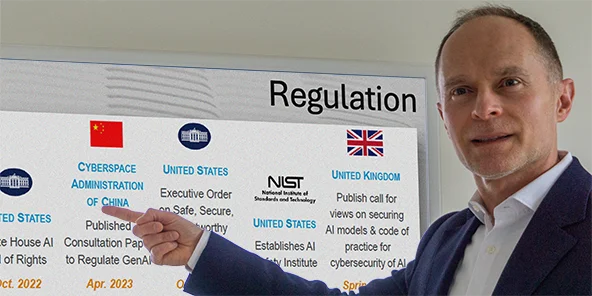
Governments around the world are scrambling to catch up to advancements in AI. While I’m not a lawyer, I can provide an overview of existing and upcoming AI regulation, and how it might affect you.
Also if you already have AI policies, compliance or audit programmes in place, let’s remind participants what they cover and where to find them.
...your own AI topic
Want some tips on how to get useful output out of image generators like Nano Banana, or video generation tools like Veo 3 and Sora? How about using AI to create data visualisations of your existing PDFs, spreadsheets and presentations? I’m happy to help wherever I can — let’s talk!